
- Expert technical skills in user research, information architecture, prototyping and highly iterative build/test loops.
- A long-standing user-centred, product design approach to design.
- Designed products for as much as 50,000 users in more than 25 countries.
- Expert at managing relationships with global corporations and government bodies.


Staying relevant in an industry in constant flux
The first step: getting excited
I’ve been working in the technology industry for a while now and it’s been quite a ride. Watching a revolution unfold has been fascinating but watching from inside the industry that built it has been a real privilege.
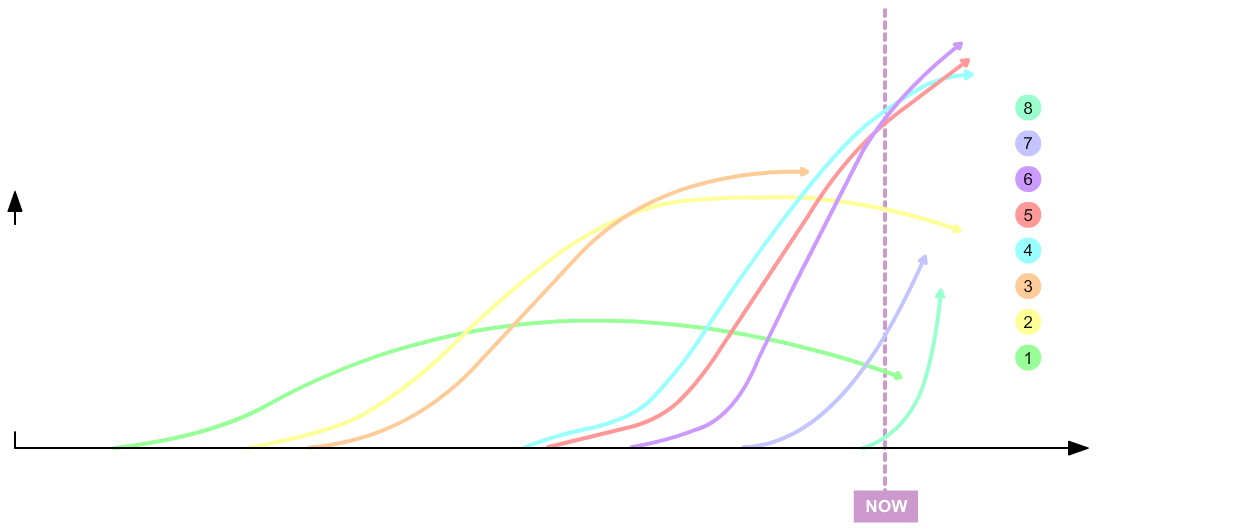
As the rate of change in technology gets ever faster, staying ahead of it can be quite daunting. So how do you stay relevant? For me, it’s been a passion for getting to the heart of and solving real problems for real people. When I focus on the potential for new technologies, new ways of working, or new software to solve those problems, I get really excited and want to learn more about them. That’s the first step.
The view from inside a revolution
The first time I realised I was inside a revolution was when the dot-com-boom exploded. Ireland Inc. had seized the opportunity and become a leader in this brave new world. I was excited to be one of three employees from an Irish start-up, sent to work at Microsoft headquarters in Seattle. We were there to show how to design and build the first interactive learning products to be shipped with Windows. I remember the thrill of working in the same office Bill Gates and his team had worked in a few years before. Even though dot-com-boom eventually turned to dot-com-bust for that Irish start-up, it was an amazing ride that forged lifelong friendships and gave me a taste for more.

I remember the thrill of working in the same office Bill Gates and his team had worked in a few years before.
Since then the ride has continued to thrill. When Steve Jobs announced Flash would not be supported by Apple’s gorgeous new products I knew change was coming soon. After years becoming expert at Flash, that was the hard part. The fun part was discovering HTML5 Canvas. It produced better experiences for users, and hand-coding the animations reminded me of making animated sprites on my Commodore computer many moons before.
The next step: making it happen - fast
So, you believe change is on its way and you’re excited about it. The next step is convincing the management team you’re right. For me, explaining why clients will be asking for something soon and what you can do to be ready has worked. Also, if any competitors are already doing it, showing examples really helps. A few years ago, I read that tablets were being adopted as business tools. I was working in a company that built software for users who worked remotely, and so I set about learning responsive design and coding, and design patterns for mobile. I then suggested we include a mobile-responsive eBook as part of a tender. We won that contract despite competition from global design agencies. Since then, almost overnight, clients have expected software to be mobile friendly, and now mobile first.
That brings me to UX design. I am delighted to see how pervasive it has become. I studied product design at university where we were taught that good design understands and then solves problems for users. I firmly believe a user-centred approach is now essential for companies to continue to win contracts. That kind of imperative gets a management team listening.
Making it happen takes time and effort, and help from the experts
A year ago, I decided to update my design vocabulary so I could communicate my user-centred process effectively. And I wanted to explore new ways of working, like agile design and guerrilla UX. That’s what brought me to Interaction Design Foundation (IDF).
... the courses are built on the skills you will need to succeed in real work situations.
I first considered a masters but after much research and quizzing industry contacts I chose IDF. Their courses covered everything I needed to learn and their reputation in the industry is second to none. The methods they teach prepare you for designing the ever-increasing ways users will be interacting with technology into the future. And most importantly, they have strong links with industry, so the courses are built on the skills you will need to succeed in real work situations.
Staying focused while learning online
I’ve been learning with IDF for a year and the other day I received an email from the founder, Mads asking me to write about my experience of their courses. When he said I was in the top 1% of students, I wasn’t sure if it was real. It only sank in when he sent me a follow up email. Then I got very excited.
When he said I was in the top 1% of students, I wasn’t sure if it was real.
So, as Mads requested, here are my tips for how to stay focused while learning online:
- If you have space onscreen, open a word document beside your course window and paste the current lesson’s open-ended question into it. This helped me to keep the question in mind as I read; often the full answer is in several parts of the lesson. Knowing this also helped me to keep focused.
- Resist the urge to rush through lessons that you think you know the answers to. I generally found that there was something new to learn even if the lesson was already familiar to me.
- If you’re unsure about an answer, go back over the content again. If that doesn’t work, try exploring the reference material listed at the end of a lesson. Finally, if you are still not sure then use a search engine to find more detailed articles.
- It can be tempting to skip past the discussion groups because they don’t contribute to your final score, but I found them really useful for putting the learning in context, from the perspective of other learners and by thinking about my own perspective. And the IDF Community Influencer badge looks good on your profile too.
Staying relevant into the future
I’ve completed two courses so far; Become a UX Designer from Scratch and Interaction Design for Usability, with a top 10% distinction in both. You can check out my IDF profile and certificates here:
IDF Profile
I’m focusing on the Mobile UX Design course now but have also started UX management, Strategy and Tactics. There are many others that I know will bring really useful learning, so I intend to continue studying with IDF into the future. After all, this industry insists upon continuing learning. And judging by recent developments in AI, IoT and machine learning, it’s just getting started. As always, it can be quite daunting, but I can’t wait to dive in.
Contact
- Email:info@brianyoung.ie
- Phone:+353 86 6096230
Connect


Connect
Quick facts
- UX/UI & print design
- 17 years in senior role
- Blue chip companies
- NCEA & AIB award winner